
Explore the Best "Must-See" Sites in Minnesota's Voyageurs National Park
- Wade Watson
- Feb 6
- 14 min read

As a licensed guide in the area for nearly 30 years leading fishing trips, boat tours, and kayaking adventures I feel that my "list" will bring you to Voyageurs "best" and also some of the "local" sites if you are visiting Voyageurs in the near future.

Remember, Voyageurs National Park is a "water-based" National Park, so to see many of the historic sites you will need to use a boat. Don't worry if you don't have a boat...many operators and/or resorts offer rentals, private tours, or the National Park Service has larger tours to see some of these areas that make Voyageurs National Park so special.
Nestled within the vast wilderness of northern Minnesota, is Minnesota's ONLY National Park- Voyageurs National Park. Established in 1975, Voyageurs offers visitors a unique blend of natural beauty, wildlife, and outdoor adventure. Known for its clear waters, abundant fish species, and scenic islands, this lake is a prime destination for anyone seeking a memorable experience in the great outdoors. Recognized as a historic route of the fur trade and early explores, Voyageur's use these large waterways to travel from Hudson Bay to Lake Superior. Whether you are an avid angler, a nature lover, or someone looking to explore pristine landscapes, this area has something special to offer.
Where to start: Visiting northern Minnesota's Voyageurs National Park for the first time?
Four main entrance points (Kabetogama, Rainy Lake, Ash River, and Crane Lake) will be the key to your adventure. Lake Kabetogama is the heart of the park, with many tours, resorts, and activities to base your trip out of. Just east of Kabetogama is a smaller resort community known as "Ash River". Ash River has resorts, rentals, houseboats, and a Park Visitor Center with large parking areas for tourists that are hiking, camping, or exploring on their own. Crane lake is on the far east end of Voyageurs, and is a small community of resorts and RV sites with a number of private homes, a seaplane base, a new Park Visitor Center, and on the edge of the Boundary Waters Canoe Area.

Rainy Lake is known for one of the best fishing lakes in Minnesota. Rainy lake is the northern portion of Voyageurs and next to International Falls, MN. The largest Visitor Center is on the edge of Rainy Lake a few miles east of International Falls. Each area offers entrance into Voyagers National Park as well as lodging options and private guides that offer boat tours and fishing trips. Voyageurs Stretches approximately 60 miles long, divide into two main areas: Rainy Lake basin and Namakan Basin (Kabetogama, Namakan, Ash River, Sand Point, Crane Lake)
This guide highlights the top attractions on Lake Kabetogama, helping you plan your visit and make the most of your time in Voyageurs National Park.

General Information:
Tourist sites in Voyageurs National Park offer a diverse range of attractions that cater to nature lovers, adventure seekers, and those looking to relax in a serene environment. This stunning park, located in northern Minnesota, is renowned for its breathtaking landscapes, which include interconnected waterways, lush forests, and abundant wildlife. One of the most notable features of Voyageurs National Park is its extensive system of lakes, particularly Rainy Lake, Kabetogama Lake, and Namakan Lake, which provide ample opportunities for boating, fishing, and kayaking. Visitors can explore these waterways by taking guided tours or renting boats or kayaks to discover hidden coves and islands.
In addition to water-based activities, the park is home to numerous hiking trails that wind through its picturesque terrain. The Kabetogama Peninsula offers trails that range from easy walks to more challenging hikes, allowing visitors to immerse themselves in the natural beauty of the area. Most visitors are using the "remote camping" sites to spend several days on inland lake or these hiking trails to get a full experience, although some trails like the "Locator Lake" or "Cruiser Lake" trail have wonderful day hikes if you can get out to the peninsula. Along these trails, hikers can encounter a variety of wildlife, including deer, moose, and numerous bird species, making it a prime destination for wildlife enthusiasts and photographers. For those interested in history, the park also features several historical sites, including remnants of the early fur trade and Native American heritage.
Overall, Voyageurs National Park is a treasure trove of natural beauty and recreational opportunities, making it an ideal destination for tourists seeking adventure, relaxation, and a deeper connection with nature.
*Shout out to "Tim Watson"- a local legend (previous owner of Harmony Beach Resort/long-time guide) and father-figure to me for teaching about the history and sharing love of the Kabetogama area with me and many others. Our family history in the area dates back to my great-grandfather Tom Watson who owned and operated "Watson's Lakeview Resort" in 1916. Here are some of my favorite sights in the area:

Kettle Falls Hotel-

Fully functional hotel, bar, restaurant only accessible by boat or float plane. The history of Kettle Falls is as colorful as the red roof on the hotel. Constructed by timber cruiser Ed Rose and reputedly financed by Madame Nellie Bly, the Kettle Falls Hotel has accommodated and entertained travelers since 1913. Robert Williams bought the hotel in 1918 for $1,000 and four barrels of whiskey. From its somewhat scandalous past, grew a long tradition of hearty home cooking and hospitality served by the Williams family. A destination for logging crews, offering booze and night life, Kettle falls was an early brothel for these lumberjacks and travelers. This historic hotel was renovated by the National Park Service in 1987 so you, too, can enjoy a hearty meal, relax on the veranda or spend the night. Some also say that Kettle Falls Hotel is hunted, and stories of odd noises or visitors maybe lure or legend.
A "highlight" is the bar floor which is wildly sloped worth the picture and a game of pool.
"Must have" drink called a "pinky"- an icy, pink lemonade vodka cocktail to cool you off on a hot summer day of boating.
Kettle falls hotel/restaurant operates from May to late September.

Kettle Falls Hotel is the only lodging within Voyageurs National Park. Remotely located on the far eastern side of the Kabetogama Peninsula, it is approximately 15 miles from the nearest road and is only accessible by water.
Hoist Bay- Namakan Lake
Hoist Bay Resort is a former summer resort on Namakan Lake, Minnesota, in what is now Voyageurs National Park. Ted and Fern Monson established the resort in 1939 and operated it every summer until 1973, except for a three-year hiatus during World War II. The remote property was and remains accessible only by water. It was nominated for exemplifying the family-owned resorts established in the mid 20th century to serve the growing phenomenon of middle-class tourists.[3]
The National Park Service maintains the site as a day-use destination within Voyageurs National Park. Several of the historic buildings are open to visitors, along with basic amenities consisting of a boat dock, an outhouse, and picnic tables. Use caution as you approach, the bay is filled with timber or "old" dock posts- a fisherman's dream, but a hazard to be aware of.

In 1905 Edward Hines and the Weyerhaeuser family pooled their resources to create the Virginia and Rainy Lake Lumber Company. The flag ship of the company was its sawmill in Virginia, Minnesota, which could process one million board feet of lumber a day.
To transport logs to the sawmill before the days of modern logging technology, logs had to be floated down rivers and winched across lakes in giant booms by amphibious boats called gators. Hoist Bay, home of the Virginia and Rainy Lake Logging Camp 75, was one of these destinations.
At Hoist Bay, a hoist machine lifted the logs out of the water and placed them on empty train cars for transportation. Pictured below is the railroad trestle and hoist built across the water. The train then transported the logs to Virginia, Minnesota to be cut into boards.
Between 1913 and 1929 the camp in Hoist Bay operated for 16 years. In its lifetime, 13.5 million board feet of lumber entered its waters. By 1929 most of the white and red pine stands were cut; Camp 75 was shut down and dismantled, ending one part of the Hoist Bay story.
The Recreation Era
Monson's Resort- The Hoist Bay area lay dormant for almost 10 years, changing ownership 50 times, until 1939 when Ted and Fern Monson purchased the land, starting a new chapter in its history.
When the Monson's arrived, there were few reminders of the previous logging era. The only remnants included the railroad trestle, an old root cellar, and a garbage dump.
Between 1939 and 1945 the Monson's built 4 cabins; each cabin had 4 bedrooms, a kitchen, and a living room. Modern amenities such as indoor bathrooms and electricity were added in the 1950s. In all, the Monson's built 14 buildings that were enjoyed by summer visitors, and they catered to their guests’ needs for 35 years only closing for 3 years during World War 2.
Ted and Fern decided to sell the resort in 1973, and in 1978 the Hoist Bay land was acquired by the National Park Service. It was designated a point of interest for visitors, and a new chapter in the history of Hoist Bay began.
Steven's Island/historic site- Namakan Lake
Along the waterways on a boat tour of Voyageurs National Park's waterways, find your way to a beautiful island in Namakan Lake known as Steven's Island. Wonderful dock with lift for accessibility and gravel trails will lead you on a self-guided tour through some of the area's history. Excellent signage by the National Park will tell you a fabulous history of one man's adventures and time in the area- "highlight" here is the perfect spot to picnic and swim in the waters of history.
The Story of I.W. Stevens
Ingvald Walter Stevens was born in Vang, Valdres Norway in 1885 and immigrated to the U.S. at age 19. In 1932 he purchased a 400-acre island in what is now Voyageurs National Park. “Steve,” as he became known, lived alone year round on the island for nearly fifty years and became a symbol of self-sufficiency and independence.
"I love solitude, I love the wilderness, I love the wildlife. I do not like crowds. I do not like the city, where even the snow is dirty. I like my own company. I don’t want to live if I can’t take care of myself."

He heated his cabin with wood, grew his own vegetables, ground wheat and baked his own bread, read by gaslight, hauled water from the lake, in the winter chopping through thick ice. Civilization was 16 miles by boat or four miles on skis. An Associated Press article in 1977 made him a celebrity for awhile. A prolific writer, Stevens answered letters, wrote articles for outdoor magazines and kept a daily diary. He left Namakan Lake in 1979 at the age of 94 and lived to be 104.
For photos and excerpts from I. W. Stevens' journal, read "Tales from Namakan Lake."
Pictographs of Sand Point Lake-

Ancient Ojibwe pictographs, featuring red ochre paintings of animals and canoes, are found on rock faces in Voyageurs National Park, specifically within the Namakan Narrows. These 500-to-1000-year-old, or older, symbols (often red ochre) represent cultural stories, and are best viewed by boat.
Key Locations and Details
Namakan Narrows: Accessible by boat tours, this area on Namakan Lake features paintings created by the Ojibwe nation.
Other Sites: While the most prominent in the park are in the Narrows, similar, well-known, and slightly older (500–1000 years) sites exist nearby in the Boundary Waters Canoe Area Wilderness, such as on Lower Basswood River and Hegman Lake.
Significance: These paintings often depict moose, birds, canoes, and human figures, and were used as landmarks or to record stories.
Visibility: Best viewed from the water, often at dawn or dusk when low-angle light makes the red ochre, made from iron oxide, more visible.
Visitors to Voyageurs National Park can see these historical, delicate, and protected sites via private boat, kayak, or guided boat tours.
Ellsworth Rock Garden Lake Kabetogama
The Ellsworth Rock Gardens have been known as the “Showplace of Lake Kabetogama” since the 1940s. Jack Ellsworth, the garden’s creator and a self-taught artist, used natural elements of the native northern Minnesota landscape as his artistic media, creating an original and distinctive art environment on the north shore of Kabetogama Lake. Over a period of roughly twenty years,

Ellsworth, a carpenter from Chicago, used art and engineering to create a complex, terraced garden on a prominent rock outcrop. Ellsworth constructed 62 terraced flower beds on the outcrop, which he filled with more than 13,000 lilies and other flower varieties. He then accented his garden landscape with over 200 abstract rock sculptures that have been compared to the work of modern sculptors like Noguchi and Brancusi. The uniqueness and magnitude of Mr. Ellsworth’s creation and the garden’s importance as a recreational destination since the 1940s establish its significance. The gardens are eligible for the National Register for Historic Places and are the most popular day use destination in Voyageurs National Park.
Vermillion Falls- Crane Lake

Vermilion Falls is a torrent of water cascading through a 10-foot wide chasm in the granite. It is part of the Vermilion River which runs north 40 miles from Lake Vermilion and empties into Crane Lake through the Vermilion Gorge. Easy to moderate ¼ mile round trip trail to the falls and observation deck is accessible and passes by three picnic sites which overlook the river. You may bring a portable charcoal grill or camp stove for cooking at the picnic sites. Campfires are not allowed. Please pack out all trash and protect this fragile area.
Dark Night Sky- Lake Kabetogama
Private Tours: Voyageurs Adventures Dark Night Boat Tour
Voyageurs National Park: Designated Dark Sky Park

Surrounded by miles of lakes and wilderness area, the skies above Voyageurs are free from the excessive, misdirected, and obtrusive artificial light often produced in large urban cities. The northern dark skies in Voyageurs have historically been valued and observed by many people including the Anishinaabe, the bold and outgoing French-Canadian voyageurs, lumberjacks, gold miners, commercial fishermen, and present-day visitors. By becoming a Dark Sky Park, Voyageurs can better preserve the amazing cultural, historic, and natural resource that is our night sky.
The First Step: Learn Your Lights
To become Dark Sky designated, Voyageurs partnered with the National Park Service’s Natural Sounds and Night Skies Division as well as the International Dark-Sky Association (IDA): the globally-recognized leading authority on combating light pollution. IDA’s mission is to preserve and protect the nighttime environment and our heritage of dark skies through environmentally responsible outdoor lighting.In 2019, the park worked with the IDA to take major steps towards designation. First, staff checked all man-made lights in the park to determine which ones create light pollution. Once the noncompliant lights were identified, the park began to retrofit or replace them with "night sky friendly" lights—many of which were provided by the Voyageurs Conservancy.
Gold Rush- Little American Island- Rainy Lake
Gold Portage- Lake Kabetogama
Gold was discovered on Little American Island in 1893, sparking a brief, low-yield Rainy Lake Gold Rush in what is now Voyageurs National Park. While the 1890s mining boom quickly faded due to low-grade ore, visitors can still explore remnants of the Little American Mine, including a 210-foot shaft, on a 0.25-mile, wheelchair-accessible, boat-accessible trail.
Historical Gold Mining (1890s)
Key Discovery: The "Little American" quartz vein was found in July 1893, leading to rapid development in 1894.
Mining Locations: Major sites included Little American Island, Big American Island, Bushyhead Island, and the Soldier Mine on Dryweed Island.
Impact: The boom led to the temporary, bustling town of Rainy Lake City, which was abandoned by 1901.
Profitability: The Little American Mine was the only one in Minnesota to turn a profit, notes this article from the Voyageurs Conservancy
Modern Context and Protections
Visitor Access: The National Park Service provides a self-guided trail on Little American Island to view the remnants of the mine, according to this website.

Mining operations were also established on Big American, Bushy Head, and Dryweed Islands. The operation on Little America Island was the largest and most profitable (although profits were modest even there), and evidence of most mines can be hard to spot today. One exception is a large horizontal mine shaft on Bushy Head Island, which is easily seen from the water. Link to article: "Golden Islands of Rainy Lake"
Hiking in or around Voyageurs National Park-
Many visitors travel from National Park to National Park, and "hiking" is a common way to see the area. At Voyageurs, remember our park is primarily "water-based" so most activities center around the lakes of the park. We do have some "hiking trails" most are short with great views, wildlife, and scenic beauty. The National Park service has a great list with short descriptions on trails of the park: Hiking Trails in Voyageurs

"Highlight" for me is in the Kabetogama/Ash River area: several trails are quickly accessed as you drive to the "Ash River Visitor Center". Trails such as "Beaver Pond Overlook" or "Kabetogama Overlook" are quick short walks on a nice path and will bring you to some wildlife and stunning views. If you are looking for a "hike" and don't have access to boat to the Kabetogama Peninsula the trail for you is called the "Blind Ash Bay Trail". This loop trail is about 2.5-3 miles of easy to moderate hike. This narrow, winding, rocky trail exposes users to the wonders of the boreal forest. This path is great for birding; it is also frequented by deer and other wildlife. From closed in forest to post card worthy views of Kabetogama Lake, this lollipop loop trail has it all.
"Backcountry hiking/camping" Lake- Kabetogama
The Park's 14 backcountry campsites are located on the interior lakes of the park's Kabetogama Peninsula and require travel by water from any mainland boat launch to access the trailheads that lead to them. The backcountry areas of Voyageurs National Park are wild, rugged, and breathtakingly beautiful. They offer more remote, secluded, and serene camping, hiking, and canoeing experiences, since they are less traveled than the frontcountry and the lakes here are smaller, protected, inland waters.
The park does not rent watercrafts of any kind on the large lakes to take you to the remote trailheads. If you do not have a watercraft, there are local businesses that offer water taxi service to and from the trailheads, as well as a variety of boat rentals, from canoes and kayaks to fishing boats and pontoons.
Voyageurs National Park has four water access points at the Rainy Lake, Kabetogama Lake, and Ash River Visitor Centers, and the Crane Lake Ranger Station. There are also public and private boat launches outside the park.
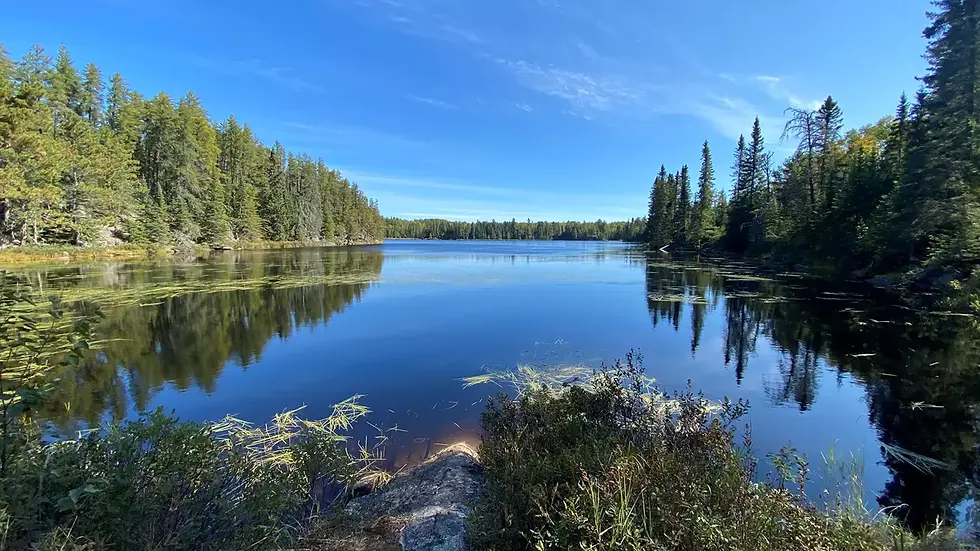
Each backcountry campsite has a canoe stationed at it that automatically comes with your overnight backcountry camping permit. Only in the Chain of Lakes area, an additional inventory of day use canoes are available for day use or to add to an overnight camping reservation on a first-come, first-served basis. Read below for more details on canoe locations and access.
Scenic Boat Tours
As most of you know- A variety of USCG (U.S. Coast Guard) licensed captains operate private boat tours in the area. We are permitted for these activities by the National Park Service and meet the qualifications required to offer tours, rentals, and guided adventures. As a proud business owner in the area, I'm happy to offer suggestions, advice, trip planning and tours (even if you don't use our services) visit: www.kabfishing.com
The National Park Service operates several larger tour boats that begin around early June and run until approximately Labor Day. One boat is on Rainy Lake, another is on Kabetogama and offers tours starting at Kabetogama and Ash River.

Camping on the Lake
Voyageurs National Park Camping Page: Link to Camping Page
Camping around Lake Kabetogama is a memorable experience. The park offers both developed campgrounds and backcountry sites accessible by boat. Popular campgrounds include:
Kabetogama Campground: Woodenfrog State Campground features 61 sites, some on edge of lake Kabetogama, amenities like restrooms, boat access, small swimming beach, and picnic areas
Backcountry Sites: Located on islands or secluded shorelines, perfect for those seeking solitude.
Camping permits are required, and it’s important to follow Leave No Trace principles to protect the environment.
Tips for Visiting Lake Kabetogama
Call, text, or email an expert...I'm happy to help: www.kabfishing.com
To make the most of your visit, keep these tips in mind:
Plan ahead: Check weather conditions and park alerts before your trip.
Bring proper gear: Life jackets, fishing licenses, and camping equipment are essential.
Respect wildlife: Observe animals from a distance and avoid feeding them.
Practice safety: Be cautious on the water, especially in changing weather.
Leave no trace: Pack out all trash and minimize your impact on the environment.
Exploring Lake Kabetogama offers a chance to experience the natural beauty and peacefulness of Voyageurs National Park. Whether you spend your time fishing, hiking, paddling, or simply relaxing by the water, the lake’s attractions provide something for every outdoor enthusiast.

Lodging in the area:
Most resorts offer weekly rentals or 3-4 day minimums. Great site to look at the variety of Kabetogama Resorts, lodging, and RV site options is: www.Kabetogama.com
We offer overnight and short-term lodging options- Small 4 plex boutique hotel. Private rooms or rent the complex. Air-conditioning, internet, private bathrooms for each room, full kitchens in several units, smart T. V's all on wooded 7-acre lot, approximately 1/4 mile from the Kabetogama Visitor Center. www.kab-inn.com


Comments